The Trolley Problem
A Guiding Hand - Provided by MH
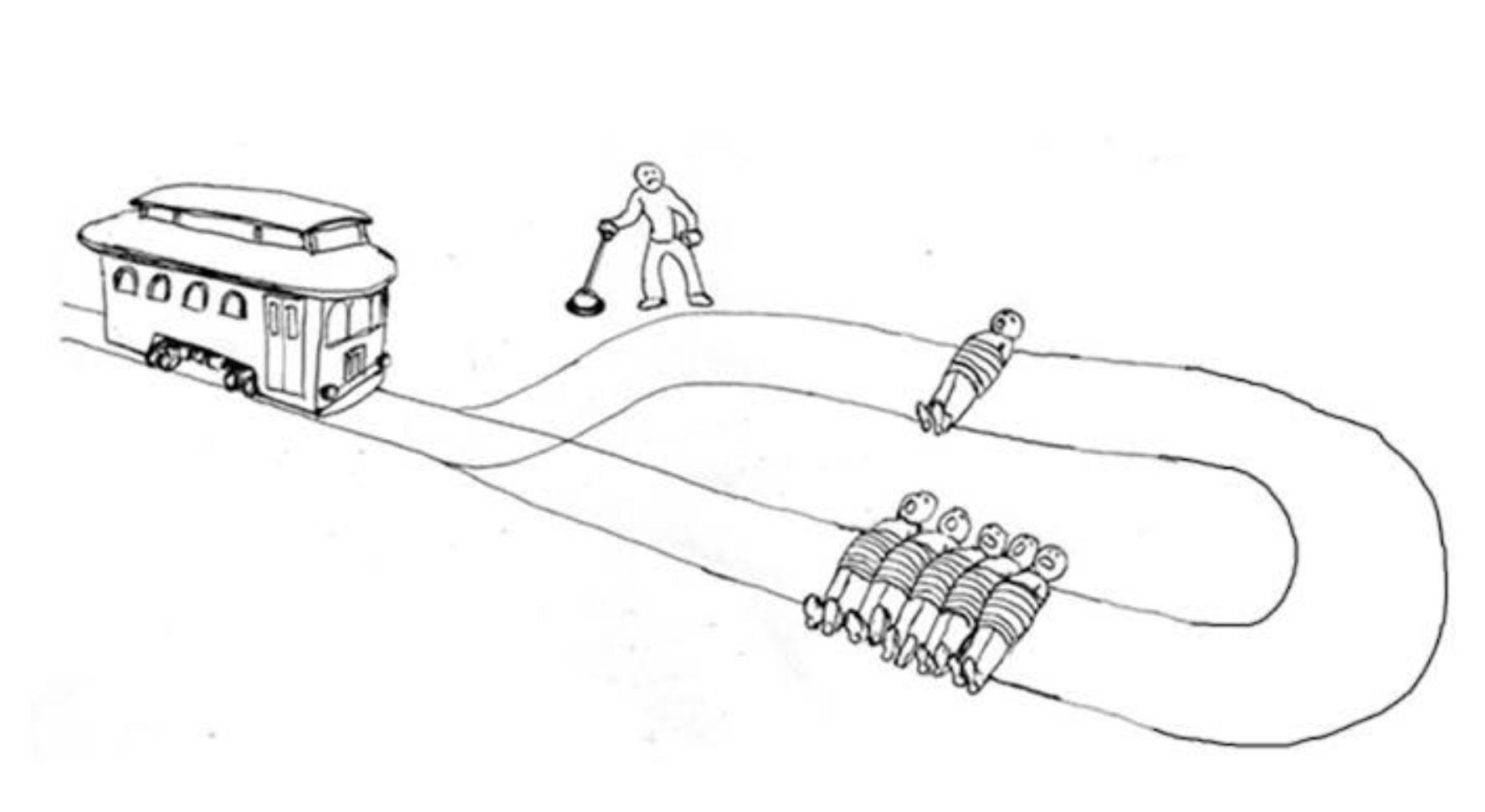
The trolley problem, a moral dilemma that has stumped thinkers since Phillippa Foot first described it in 1967. The thought experiment goes like this: say you are a rail operator tasked with switching tracks for upcoming trolleys (or trains or any other such rail-guided vehicle). Your day is going swell, until a group of rascally bandits descend upon the tracks and tie six people directly to the rails. Five are tied on to the tracks that the next trolley is headed towards, and the last is tied to another track that you can switch to with a simple turn of the lever before you. If you were to turn the lever, you can kill this single person while saving the five others. However, if you were to do nothing, you can technically claim that the ordeal was outside of your control, thereby dismissing the blame for any of the deaths. The bandits are the ones that tied those pour souls to the track in the first place. They are the ones who own the majority of the blame. You are just an innocent bystander, a person simply doing their job. Now, it is my educated guess that the majority of people will take the first option and divert the tracks. My reasoning for this is that A: Most people would rather do something rather than nothing and B: humans are biologically predispositioned to attempt heroics. In that split second of either allowing the no good bandits to kill five people instead of one, the average person would choose one because they want to save five people. They think that five people are worth saving. A machine does not have such an issue. To a machine, this is an entirely different problem. Most rail-systems in the modern world are automated, which means that the switching of the tracks is performed by a machine instead of a human. These machines do not have sensors that can tell if or when bandits descend on the tracks. All they care about is the destination of the trolley that is imputed into their system. If the destination demands that the track be switched, the track will be switched, even if there are a million people tied to the rails. This is the perfect moral equation. All that matters is that the process is done correctly. The aftermath is simply the new state of the world.